Squalane vs. Squalene
January 30, 2024
Squalane and squalene look almost identical on an ingredient list, but that one-letter difference matters. Both appear in skincare, and neither name by itself tells you whether an ingredient came from a plant or an animal source.
What is the difference?
Squalene is an oil naturally present in human sebum, the oily mixture produced by your skin. Squalane is the hydrogenated, more oxidation-resistant form of squalene. That stability makes squalane useful in cosmetic formulas.
In skincare, these ingredients are used as emollients to help skin feel soft and smooth. The Expert Panel for Cosmetic Ingredient Safety’s assessment reviews their use in cosmetics.
Where do they come from?
Cosmetic squalene and squalane can have different sources. Plant sources include olives and sugar cane; shark liver has also historically been used. The spelling on a bottle is not proof of its origin.
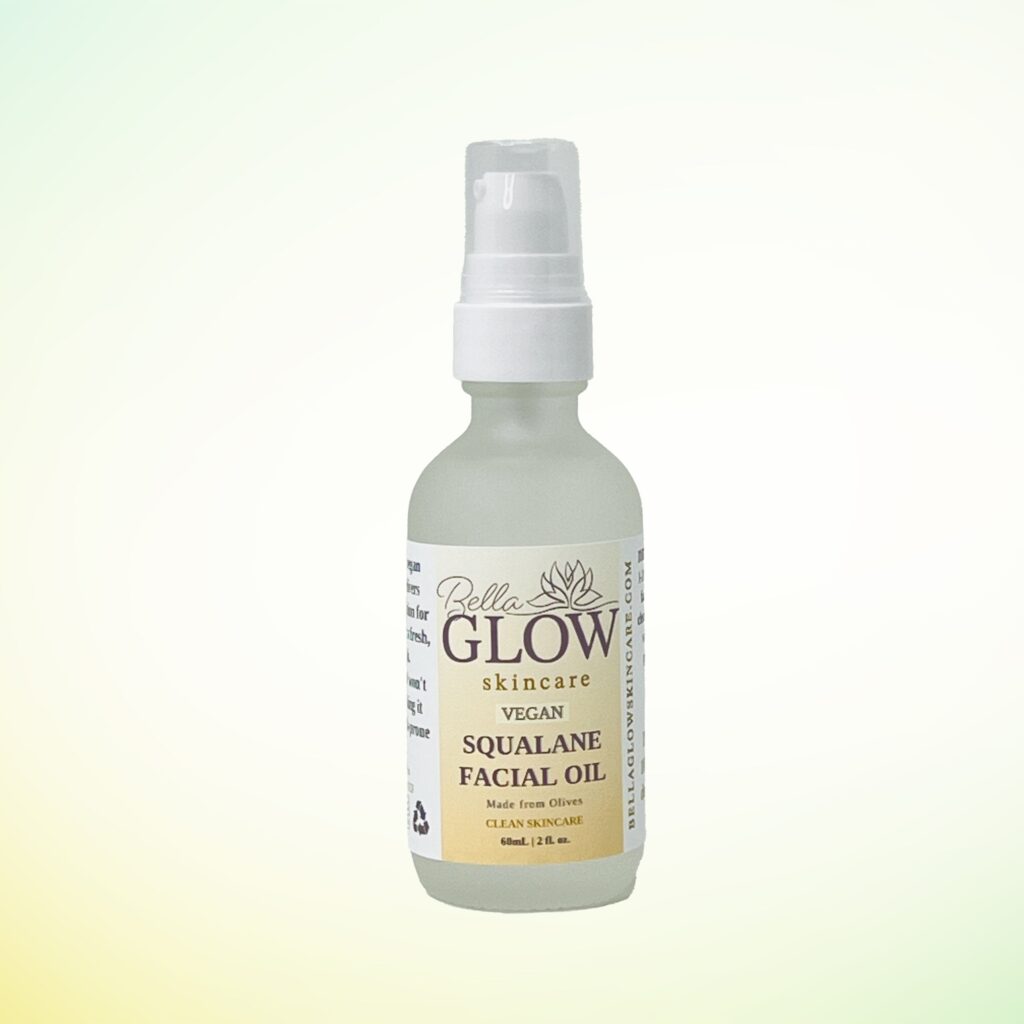
Bella GLOW’s Squalane Facial Oil is listed as olive-derived. If plant sourcing matters to you, look for an explicit source statement on the product page or ask the brand directly.
Does cruelty-free mean plant-derived?
Not necessarily. A cruelty-free statement and a vegan or plant-derived statement answer different questions. Do not assume that an ingredient is plant-derived simply because the brand uses cruelty-free wording.
Check the ingredient list, the stated source, and any relevant certification. Clear information is more useful than guessing from an unfamiliar ingredient name.
Is olive-derived squalane the same as olive oil?
No. Olive oil contains a mixture of components. Purified squalane is a distinct ingredient, so the two should not be treated as interchangeable products.
Texture and personal preference matter when choosing a facial oil. Start with a small amount and follow the product’s directions rather than assuming every oil will feel the same on your skin.
Adding squalane to your routine
A facial oil can be an optional part of a routine built around cleansing, moisturizing, and sun protection. Follow the instructions on your particular product, introduce it gradually, and stop using it if it causes irritation.
You do not need to use every type of skincare product to build a routine that suits you. If you already like your moisturizer, consider what you want an additional oil to contribute before adding another step.
Keep sunscreen as a separate step
A facial oil is not a substitute for sunscreen. The American Academy of Dermatology recommends choosing a sunscreen that is broad spectrum, water resistant, and SPF 30 or higher. Read its guide to selecting sunscreen for more detail.
For the details of our olive-derived oil, view Bella GLOW Squalane Facial Oil. If you have a question about the collection, get in touch.