Guide to Vitamins in Skincare
January 30, 2024
Vitamin names can be helpful signposts on skincare labels, but they do not tell you everything about a formula. The form of the ingredient, the rest of the product, and its directions all matter.
Topical cosmetics and dietary vitamins are separate subjects. Applying a cream does not replace dietary nutrition, and taking a supplement does not guarantee a particular cosmetic result.
Vitamin A and its derivatives
Retinoids are a family of vitamin A-related ingredients. They are not all identical, and the presence of a plant extract does not make a product equivalent to a retinol treatment.
The American Academy of Dermatology’s retinoid guide explains the distinctions. Follow the directions for your exact product and discuss suitability with a clinician when relevant, particularly during pregnancy.
Vitamin B3: niacinamide
Niacinamide is a form of vitamin B3 commonly named in skincare. Bella GLOW’s B3 + Hyaluronic Acid Facial Serum is one example of a formula built around that ingredient pairing.
Compare the full ingredient list and instructions rather than assuming that two products with B3 in their names will feel or perform identically.
Vitamin C
You may encounter different vitamin C ingredients in toners, serums, and moisturizers. A product name does not establish that every formula contains the same form or amount.
Our Vitamin C Facial Moisturizer and Vitamin C Facial Toner are current options to explore. Introduce products gradually rather than changing an entire routine at once.
Vitamin E
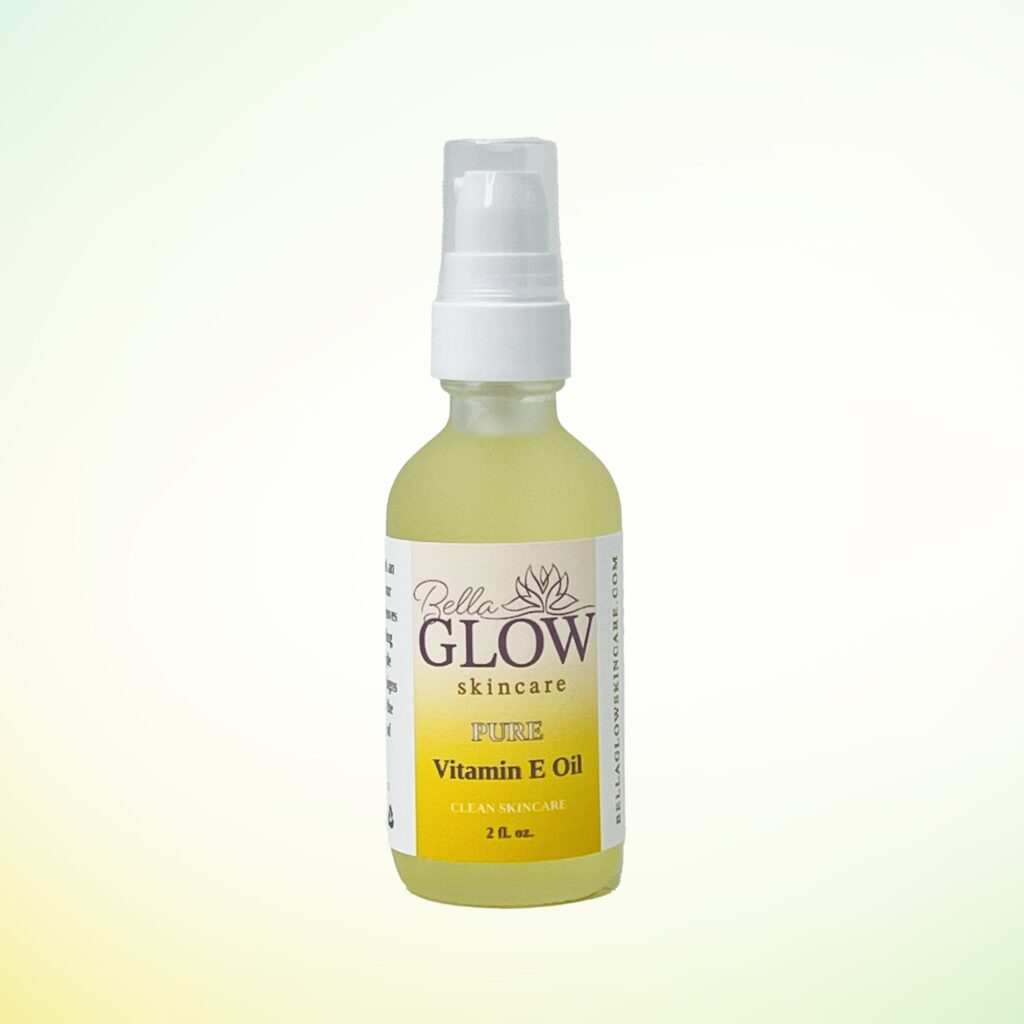
Tocopherol and tocopheryl acetate are names associated with vitamin E in cosmetics. Read our Vitamin E article for the distinction between topical products and supplements.
Antioxidants do not replace sunscreen
A vitamin product is not a sunburn cure or a substitute for sunscreen. Keep sun protection as a separate step, and follow the sunscreen selection guide when choosing a product.